 Thirty North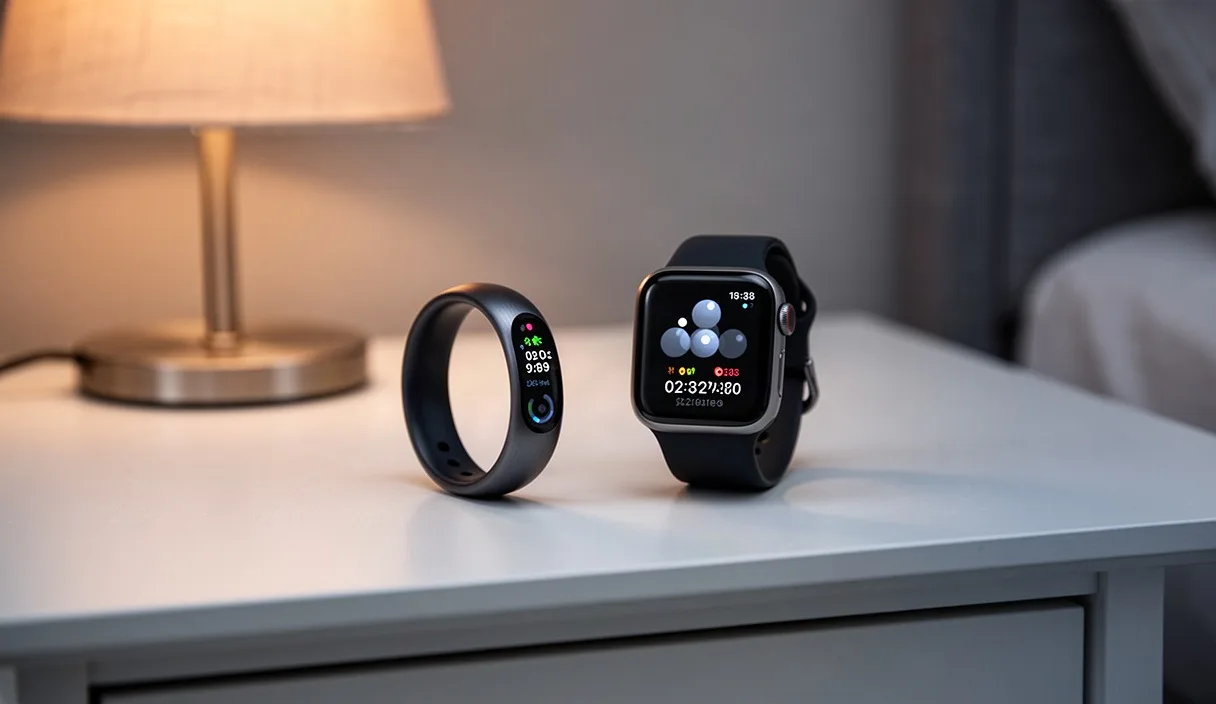
We have spent enough nights strapped, ringed, and clipped into nearly every consumer sleep tracker on the market to know one thing for certain: the data feels precise, but it is built on inference, not observation. No consumer device watches your brain waves directly. What we get instead is a careful stack of estimates, sensor readings, and algorithmic guesses dressed up as clean charts. That is not a flaw exactly, it is just how the tools are made, and understanding the process behind the numbers changes how much weight you should give them.
This piece walks through what is actually happening inside these devices, where the wrist and the finger diverge in what they can measure, which numbers are worth your attention on a weekly basis, and where the reports tend to lead you astray. We will also talk about when the smartest move is to set the tracker down entirely for a while.
How Sleep Trackers Actually Estimate Sleep Stages
Every consumer sleep tracker we have handled relies on the same core inputs: an accelerometer to detect movement, a photoplethysmography (PPG) sensor to read blood flow changes tied to heart rate, and sometimes a temperature sensor. None of these directly measure brain activity, which is what a clinical polysomnography study actually records through electroencephalography (EEG) electrodes glued to your scalp.
Instead, the device builds a proxy. It watches how still you are, how your heart rate variability (HRV) shifts, and how your breathing rate changes minute to minute, then runs that pattern through a proprietary algorithm trained on lab-verified sleep data. The output is a best guess at whether you are in light sleep, deep sleep, or REM, bucketed into 30-second or one-minute windows. Companies like Oura and Whoop have published some validation data showing roughly 70 to 85 percent agreement with polysomnography for total sleep time, but agreement for individual stages, especially distinguishing light from deep sleep, tends to run lower and more inconsistent.
We think of it the way we think of a moisture meter on a woodworking bench: useful for a fast read, terrible if you treat the number as gospel. The tool is sampling indirect signals and pattern-matching them against a population average. Your physiology might simply sit outside that average, and the device has no way of knowing that.
Wrist Bands vs Ring Trackers: The Practical Differences
We have worn both formats side by side for months, and the differences go beyond aesthetics. A wristband, like a Fitbit or Whoop strap, sits over a wider, flatter patch of skin with more motion during sleep, which means more noise for the accelerometer to filter out. A ring, like the Oura Ring, sits on the finger, where blood vessels run closer to the surface and there is less soft tissue movement, which generally gives PPG sensors a cleaner signal for heart rate and HRV.
That physical difference shows up in real use. We have noticed wristbands occasionally misread restless tossing as wakefulness, inflating the "awake" minutes in a night's report. Rings tend to be steadier on that front but can lose contact if the fit is loose, especially for people who lose or gain a bit of water weight day to day, which throws off finger circumference.
- Wristbands: easier to charge overnight in short bursts since many support quick top-ups; better for people who also want daytime activity tracking on the same device.
- Rings: less obtrusive for side sleepers and light sleepers who notice hardware on the wrist; battery life often stretches four to seven days, so charging happens during the day, not overnight.
- Mattress and under-bed sensors: a third category worth mentioning, these avoid wearing anything at all but can pick up a partner's movement or a pet on the bed, muddying the readings.
Neither format is objectively "more accurate" across the board. We would choose based on comfort and consistency of wear, because a tracker that gets taken off at 2 a.m. because it is uncomfortable gives you zero data for the night, which is worse than imperfect data.
Which Metrics Are Worth Checking Weekly
Daily sleep scores are designed to be glanced at, but the numbers that actually tell you something tend to move slowly. We check three things on a rolling seven-day basis rather than night by night.
| Metric | Why it matters | What a meaningful shift looks like |
|---|---|---|
| Resting heart rate (RHR) | Reflects recovery load and general cardiovascular strain | A rise of 3 to 5 beats per minute above your weekly average, sustained over several nights |
| Heart rate variability (HRV) | Tracks nervous system balance and recovery capacity | A drop of 15 to 20 percent below your rolling average, not a single low night |
| Total sleep time consistency | Shows whether your sleep window is stable, which matters more than any single duration | Bedtime or wake time drifting by more than 45 minutes night to night |
We pay far less attention to nightly "sleep scores" because they compress multiple noisy inputs into a single number, and small sensor errors in any one input can swing that score by ten or more points without any real change in how you actually slept. A weekly average smooths out the sensor's bad nights.
Where the Data Tends to Mislead
The most common misread we see is treating deep sleep minutes as a hard target. Algorithms are notably inconsistent at separating deep sleep from light sleep, since both look similar from the outside, low movement, steady heart rate, so a device might report 45 minutes of deep sleep one night and 90 the next for genuinely identical sleep quality. Chasing that number is chasing sensor noise.
Alcohol is another spot where the story gets skewed. Many trackers flag a drop in HRV and a rise in resting heart rate after drinking as "poor recovery," which is directionally correct, but the magnitude reported can be exaggerated because alcohol affects the same blood-vessel dilation that the PPG sensor is reading, sometimes producing a heart rate reading that overstates actual physiological strain. Similarly, illness, caffeine timing, and even a hot room can all move the same handful of signals the algorithm relies on, and the device has no way to tell you which cause is behind the number.
We have also seen readiness or recovery scores swing hard after nights with a fitness tracker slipping loose, a cold room causing vasoconstriction, or simply sleeping in a new position that changes sensor contact. None of that reflects your actual sleep, it reflects a measurement problem.
Using Trends Instead of Daily Scores
The practical fix we have settled on is treating the tracker like a slow-moving gauge rather than a daily report card. We look at 14-day and 30-day trend lines for RHR and HRV, ignoring single-night spikes entirely unless they repeat for three or more consecutive nights.
Here is the process we actually use each week:
- Export or view the rolling 7-day average for RHR, HRV, and total sleep time on Sunday.
- Compare that average to the prior week's average, not to a single "best night" from months ago.
- Note any external factors from the week: travel, illness, alcohol, unusual stress, a new medication if applicable.
- Only act on a pattern that holds for two consecutive weekly averages, such as HRV trending down for 14 straight days.
This approach filters out the sensor noise we described above and leaves you with something closer to a signal. It also means a single bad-looking night, the kind that used to send us into a spiral of adjusting bedtime routines, gets correctly ignored as statistical noise rather than treated as evidence of a real problem.
When It's Worth Skipping the Tracker Altogether
There are stretches where we take the ring or band off entirely, and we would recommend the same to most people periodically. If checking your sleep score has started to affect how you feel about your day before you have even gotten out of bed, that is a sign the tool has flipped from useful to counterproductive. Some sleep researchers refer to this pattern informally as "orthosomnia," an unhealthy preoccupation with optimizing sleep data itself.
We also step back from tracking during travel across multiple time zones, since jet lag produces genuinely chaotic HRV and heart rate patterns that no algorithm handles gracefully, and the resulting scores are more confusing than helpful. The same goes for illness weeks, when the data will simply confirm what you already know from how you feel.
If you suspect an actual sleep disorder, loud snoring with witnessed pauses in breathing, persistent daytime exhaustion despite adequate hours in bed, or unusual limb movements at night, a consumer tracker is not the tool for diagnosis. That requires a conversation with a physician and likely a referral for a clinical sleep study, since only polysomnography with EEG can properly identify conditions like sleep apnea or periodic limb movement disorder.
Common Mistakes
We see the same handful of missteps repeated across nearly everyone who starts wearing a sleep tracker for the first time.
- Treating a single night's deep sleep percentage as meaningful, when it is one of the noisiest metrics the device produces.
- Comparing your numbers directly to a friend's or a public figure's, ignoring that baseline HRV and RHR vary enormously between individuals for reasons unrelated to sleep quality.
- Wearing the device inconsistently, skipping nights, swapping wrists, loosening the band, which makes week-to-week comparisons unreliable.
- Using the readiness score to decide whether to exercise, rather than checking in with how the body actually feels that morning.
Next Steps
If you already own a tracker, start by pulling up 30 days of HRV and resting heart rate data this week and just look at the shape of the trend line rather than any single point on it. Set a recurring Sunday check-in rather than a daily glance. If you are shopping for a device, prioritize comfort and consistency of wear over marketing claims about stage-detection accuracy, since a tracker you actually keep on every night beats a more "accurate" one you take off at 3 a.m. And if something in the data, or in how you actually feel each morning, keeps pointing toward a real sleep problem, bring the trend data to a doctor rather than trying to diagnose it from an app.