 Thirty North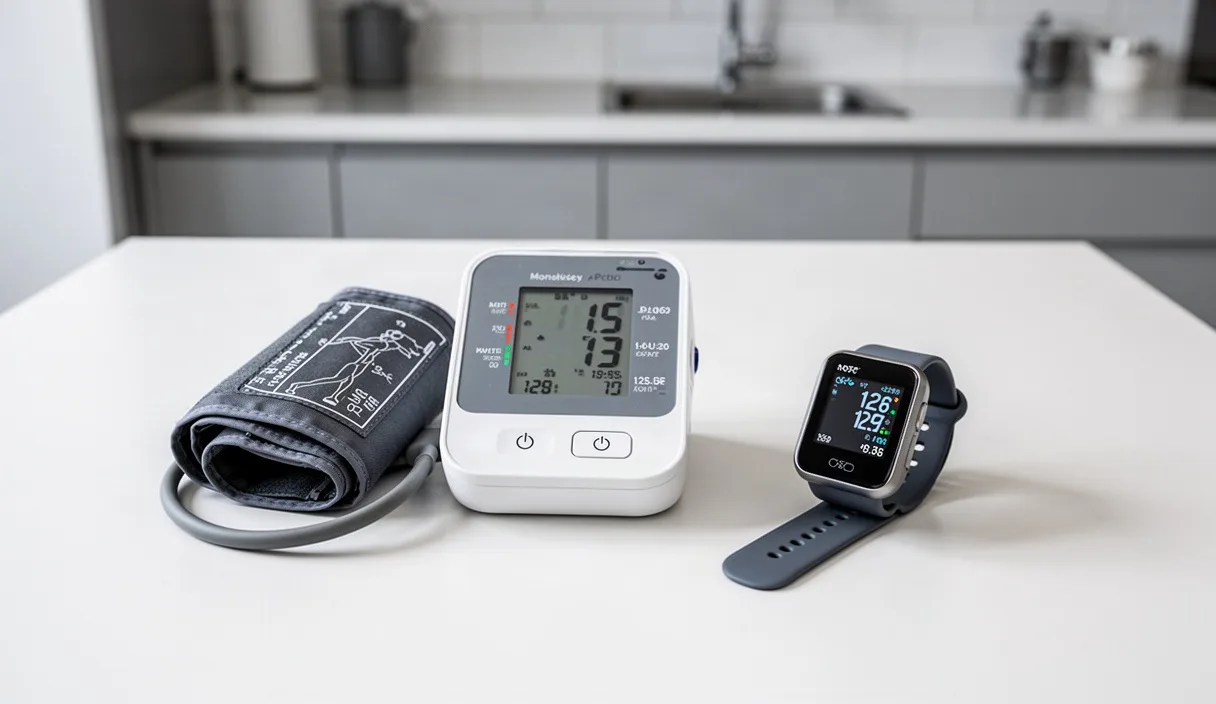
We spend a lot of time in this shop thinking about how a tool sits in the hand and whether the numbers it gives back actually mean anything. A blood pressure monitor is no different from a caliper or a moisture meter in that sense: it is only as good as the contact it makes and the habit built around using it. Over the past few months we tested and compared cuff monitors and wrist monitors side by side, on the same wrists, at the same times of day, and the differences were not subtle.
This piece walks through what we found, why the upper-arm cuff remains the more trustworthy tool for most people, and how to get a reading at home that is actually worth writing down. We will also cover the small handling mistakes that throw numbers off by ten or fifteen points, and when it is time to stop comparing notes with a device and bring the data to a clinician.
Why Home Monitoring Is Worth Doing
Blood pressure taken once a year in a clinic waiting room is a single snapshot, and it is often skewed high by the walk from the parking lot or the anxiety of the appointment itself. Clinicians call this white coat effect, and it is well documented enough that many now ask patients to bring in a week or two of home readings before adjusting any medication. A home monitor, used consistently, builds a pattern instead of a guess.
We think of it the way we think of checking moisture content in wood before a build: one reading tells you almost nothing, but a log of readings over two weeks tells you whether the material, or in this case the body, is trending in a direction worth paying attention to. The American Heart Association recommends morning and evening readings, seated, for at least three to seven days when you are trying to establish a baseline or track a change.
Beyond tracking, home monitoring catches the in-between spikes that a single office visit misses entirely. Someone with a stressful job might run high at 8 a.m. and normal by evening, and that pattern only shows up if you are measuring at home on your own schedule, not once a year on a stranger's schedule.
Cuff Monitors: What They Get Right
Upper-arm cuff monitors, the kind that wrap around the bicep and inflate with a small pump, are built around the same principle clinicians have used for over a century: measuring pressure at the brachial artery, which sits close to the surface and close to heart level when the arm is positioned correctly. That proximity to heart level matters more than most people realize, and it is the main reason cuff devices tend to outperform wrist devices in accuracy studies.
We handled several mid-range cuff monitors during testing, including models from Omron and Withings, and the build quality difference between a $30 unit and a $70 unit was noticeable in the cuff material itself. Cheaper cuffs use a thinner nylon weave that can shift slightly during inflation, while sturdier cuffs hold their shape and distribute pressure more evenly across the arm. That even distribution is part of why the American Medical Association and most cardiology groups still recommend upper-arm devices as the standard for home use.
Cuff monitors also tend to include a wider range of cuff sizes, which matters more than most buyers expect. A cuff that is too small for the arm it is wrapped around will read artificially high, sometimes by ten points or more, simply because the bladder inside cannot fully encircle the artery. Most manufacturers offer a standard cuff for arms in the 9 to 13 inch range and a large cuff for 13 to 17 inches, and measuring your own upper arm circumference before buying is a five-minute step that pays off every single time you take a reading.
- Validated accuracy: Most reputable cuff monitors are validated against clinical auscultation methods and listed on independent registries like validatebp.org.
- Consistent positioning: The upper arm sits closer to heart level when seated properly, reducing the guesswork involved in getting an accurate reading.
- Cuff sizing options: Standard and large cuffs are widely available, which matters for anyone outside the "average" arm range.
Wrist Monitors: Where They Fall Short
Wrist monitors are appealing for obvious reasons. They are smaller, they slip into a bag easily, and they do not require the two-handed wrestling match that some people experience trying to wrap a cuff around their own upper arm. We get the appeal, and for someone with very large upper arms or significant discomfort wearing a cuff, a wrist device might be the only realistic option.
But the accuracy tradeoff is real and it comes down to two things: artery depth and positioning sensitivity. The radial artery at the wrist sits much closer to the surface than the brachial artery, and it is more easily compressed unevenly, which introduces noise into the reading. More importantly, the wrist needs to be held at almost exactly heart level during the measurement, and even a few inches too high or too low can shift the reading by five to eight points. In our side-by-side testing, a wrist monitor propped on a table read consistently higher than the same person's reading from a cuff monitor taken while seated with the arm supported at heart level, and the gap closed only when we deliberately held the wrist against the chest at heart height for the full measurement, which is an awkward position to hold steady for the fifteen to thirty seconds most devices need.
Wrist monitors are also more sensitive to wrist movement and tendon tension. Clenching the hand, tensing the forearm, or even wearing the device slightly too loose changes the pressure reading against the radial artery. A cuff on the upper arm, by contrast, is measuring a larger and more stable vessel, so small movements matter less.
| Factor | Cuff Monitor | Wrist Monitor |
|---|---|---|
| Artery measured | Brachial (larger, deeper) | Radial (smaller, closer to surface) |
| Heart-level positioning | Easier to achieve seated | Requires precise wrist elevation |
| Sensitivity to movement | Lower | Higher |
| Portability | Bulkier, needs a case | Compact, fits in a pocket |
| Typical clinical validation rate | Higher among tested models | Lower among tested models |
How to Take an Accurate Reading at Home
Getting a number you can trust starts before you even touch the device. Sit down and rest quietly for five full minutes, back supported, feet flat on the floor, legs uncrossed. This is not a suggestion we would skip if we were rushing to catch a reading between tasks, because that five-minute settling period is often the difference between a reading of 128 and a reading of 142 for the same person on the same morning.
Once seated, rest the arm on a table or armrest so the middle of the cuff sits at roughly the same height as the heart, which for most people is around mid-chest level when the forearm rests flat. Wrap the cuff directly on bare skin, not over a sleeve, and position the lower edge about one inch above the inside of the elbow. Keep both feet flat and avoid talking during the measurement, since talking alone can raise systolic readings by several points.
Take the reading twice, one minute apart, and record both numbers along with the time of day. The American Heart Association suggests averaging the two readings if they differ significantly, and doing this morning and evening for a week gives a far more reliable picture than a single reading taken once and trusted completely.
- Avoid caffeine, exercise, and smoking for 30 minutes before measuring.
- Empty your bladder, as a full bladder can raise readings measurably.
- Sit quietly for 5 minutes with back supported and feet flat.
- Position the cuff at heart level on bare skin.
- Take two readings one minute apart and record both.
Common Mistakes That Skew Results
The most frequent error we saw in our own testing, and the one clinicians mention most often, is measuring over clothing. Even a thin shirt sleeve can add several points to a reading by changing how the cuff compresses the arm. Rolling a sleeve up is fine; leaving it in place is not.
Crossing the legs is another quiet culprit. It sounds minor, but crossed legs raise systolic pressure by a small but measurable amount in most people, enough to matter if you are tracking trends closely. Similarly, a cuff placed over a wrist watch, tight sleeve, or bunched fabric near the wrist device introduces the same kind of interference.
Talking or checking a phone during the measurement is a habit worth breaking entirely. So is taking a single reading and treating it as gospel. Blood pressure naturally fluctuates throughout the day due to activity, stress, temperature, and even the time since your last meal, so one number rarely tells the full story the way a week of consistent readings does.
When to Bring Readings to Your Doctor
If your home readings consistently run at or above 130 over 80, or if you notice a pattern of spikes above 140 over 90 even occasionally, it is worth bringing the log to a doctor rather than adjusting anything yourself. Bring the actual numbers, dated and timed, not just a memory of "it's been running high lately."
A sudden reading above 180 over 120, especially paired with symptoms like chest pain, shortness of breath, or vision changes, is not something to monitor and wait on. That combination warrants contacting a medical professional promptly rather than waiting for a scheduled appointment.
For anyone starting or adjusting blood pressure medication, home readings can be genuinely useful data for a physician, but they are not a substitute for clinical evaluation, and no home device should be used to self-diagnose or self-medicate. If you are unsure whether your monitor is reading accurately, many pharmacies and clinics will let you bring your device in to compare it against a professional reading, which is a useful check worth doing once a year regardless of which style you own.